Safety Sensors and Auto Body Repair: Protection and Calibration Standards
Little Rock, United States - December 24, 2025 / Bale Collision Center (Downtown) /
Little Rock, AR – Bale Collision Center (Downtown) is redefining what it means to deliver safe, modern collision repair by integrating certified sensor calibration into every auto body repair process at its Downtown Little Rock location. As vehicle safety systems evolve with advanced driver-assist technologies, Bale Collision Center addresses the critical need for precision diagnostics and recalibration after collisions.
Modern vehicles rely on networks of sensors that operate systems like automatic emergency braking, lane-keeping assistance, blind spot monitoring, and parking aids. These advanced features require exact sensor alignment and clean communication with vehicle control modules. Even minor accidents can disrupt sensor positioning or damage internal circuits. Many ADAS impairments cannot be detected through visual inspection alone, and unresolved alignment issues can affect how safety systems perform.

Why Sensor Calibration Is Now Essential
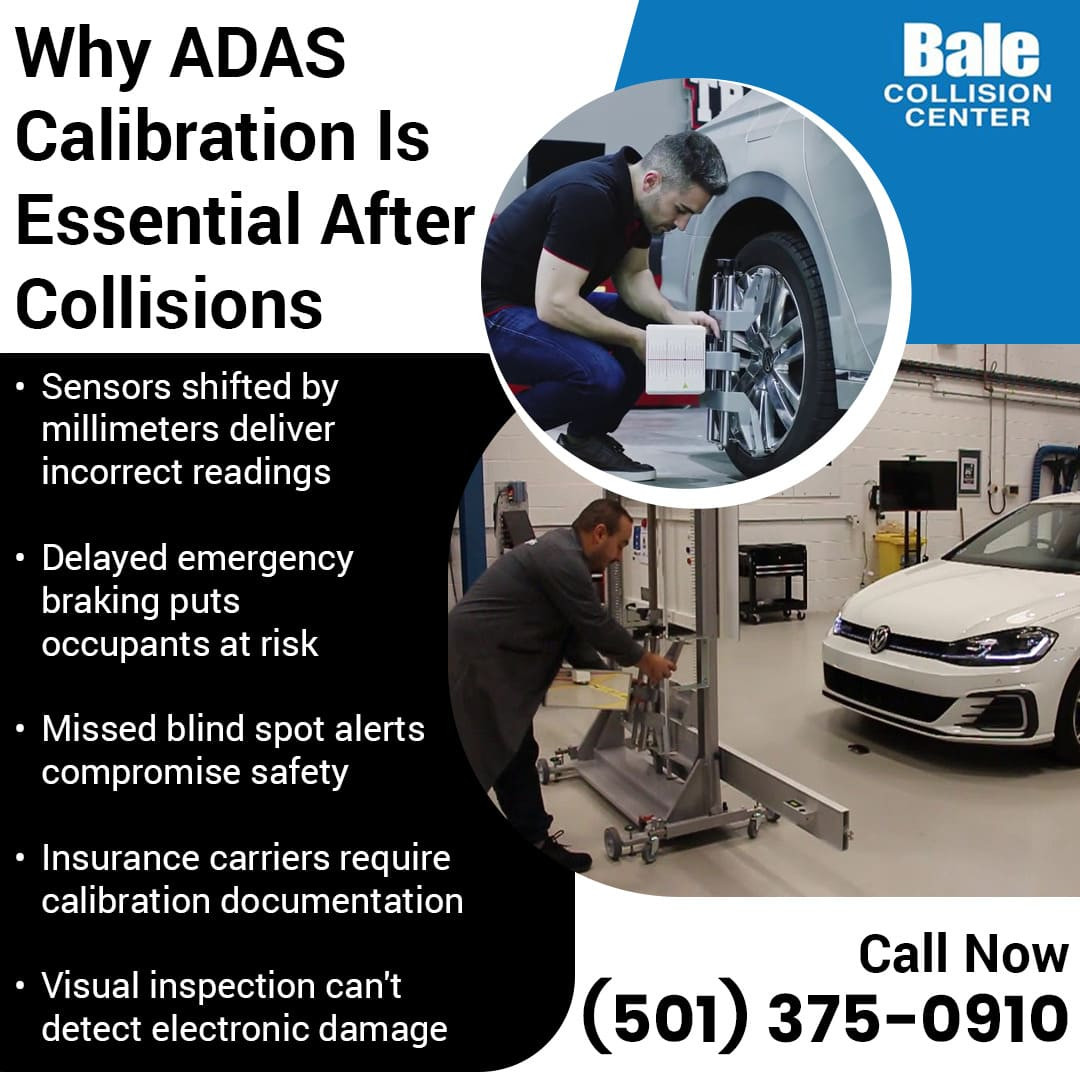
Today’s safety features are engineered with exacting tolerances. A sensor shifted by just a few millimeters may still function, but deliver incorrect readings. This leads to delayed emergency braking, missed blind spot alerts, or steering assist that reacts unpredictably.
Uncalibrated systems not only put occupants at risk, but they also reduce trust in the technology that drivers depend on. Insurance carriers commonly request documentation when OEM repair procedures require ADAS calibration for the parts or systems involved in a claim. Bale Collision Center meets this standard through certified auto body repair procedures and diagnostic reporting.
A visual inspection alone cannot determine if systems like lane-keeping assist or forward collision detection are operational. Electronic scans and OEM-specified calibration procedures, including the use of tools that meet manufacturer requirements, are the reliable methods to verify ADAS performance.
Bale Collision Center: Certified Collision Repair with OEM Calibration and Trained Technicians
Certified Processes that Restore Functionality
At Bale Collision Center, every repair begins with a digital scan that identifies hidden electronic damage and checks calibration status. This step allows technicians to create a repair plan that goes beyond cosmetic fixes to address internal safety systems.
Technicians then apply protective measures throughout the repair process. During structural work or painting, sensitive components are shielded or temporarily removed to avoid damage from heat, dust, or electrical surges. Once the bodywork is complete, sensors are recalibrated using manufacturer-specified equipment in a controlled environment. This includes both static calibration using targets and dynamic calibration through monitored test drives when required by vehicle make and model.
Sensor recalibration is a critical step in the safe restoration of modern vehicles. A properly calibrated system restores the vehicle’s ability to detect, alert, and intervene as designed by the manufacturer. Skipping or mishandling this step can lead to feature failure during critical moments on the road.
Trained Technicians and Manufacturer Protocols
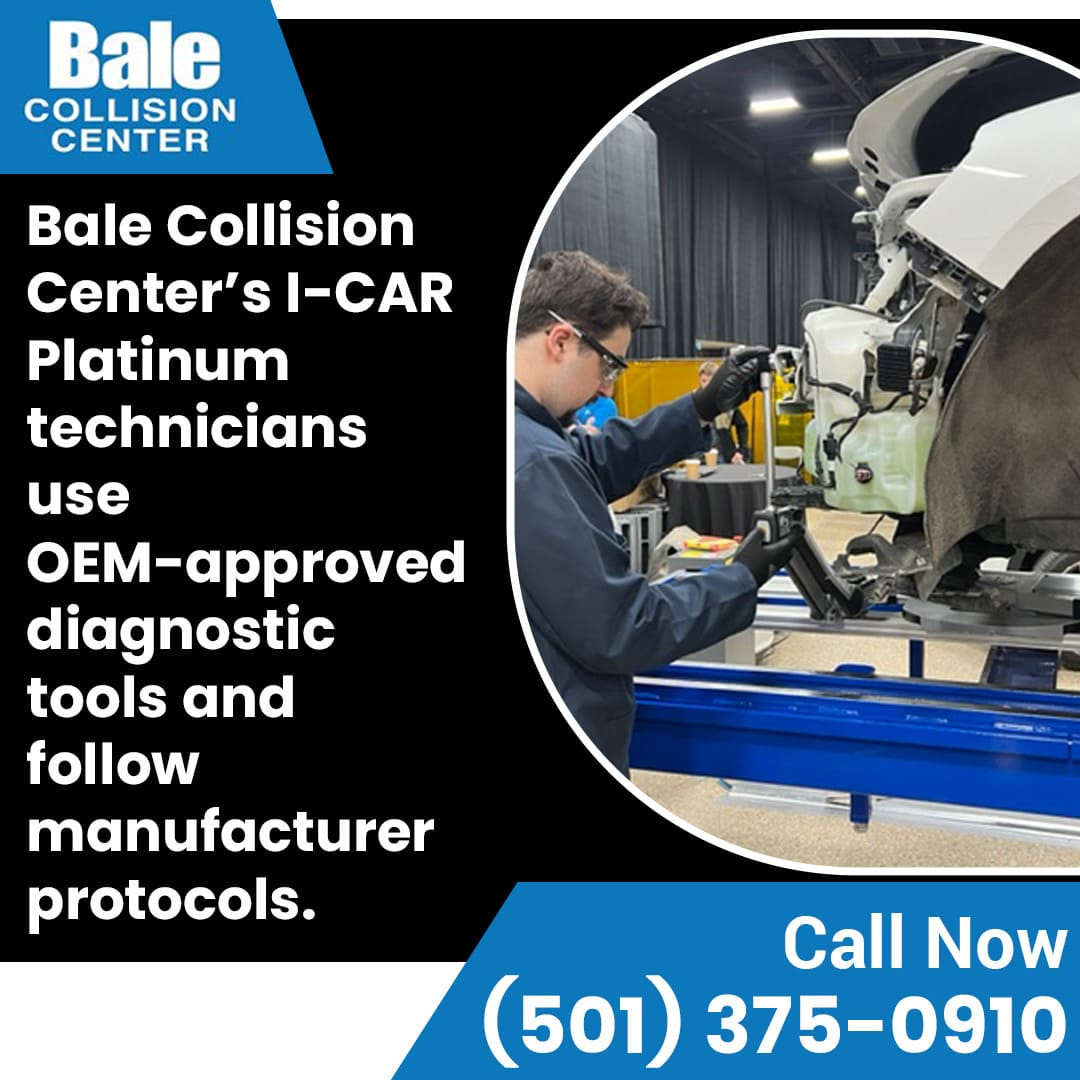
Bale Collision Center’s technicians hold I-CAR Platinum certification and undergo regular training on evolving safety systems. The auto body shop is equipped with OEM-approved diagnostic tools that interface directly with vehicle control modules. This allows precise identification of sensor faults and verification of successful recalibration across domestic, Asian, and European brands.
By following manufacturer repair databases, the team adheres to strict calibration procedures based on vehicle year, make, and model. This includes using original equipment (OEM) sensors when replacements are necessary. Unlike aftermarket parts, OEM sensors are built to exact design specifications, which allows seamless integration into vehicle safety systems.
A Higher Standard for Auto Body Repair
Bale Collision Center combines 72 years of experience with modern technology to deliver high-quality auto body services in Downtown Little Rock. Customers receive detailed reports showing pre- and post-repair sensor diagnostics, along with updates throughout the process. This transparency builds confidence that every system has been fully restored to manufacturer specifications.
As more vehicles rely on electronic safety systems, the margin for repair error narrows. Bale Collision Center meets that challenge with tools, training, and processes that bring vehicles back to full protective function. Drivers receive documentation showing that repairs and calibrations follow OEM procedures to help restore system performance.

Schedule Certified Collision Repair That Restores Safety
Even minor collisions can disturb radar units or disable vehicle safety sensors without visible signs. Restoring these systems through certified calibration, when required by OEM repair procedures, is important for maintaining intended safety performance. Contact Bale Collision Center at (501) 375-0910 or bccdowntown@baleautomotive.com to schedule a certified diagnostic scan and car body repair in Downtown Little Rock.
Contact Information:
Bale Collision Center (Downtown)
100 N Cross Street
Little Rock, AR 72201
United States
Jason Spiller
(501) 375-0910
https://balecollision.com/
Original Source: https://balecollision.com/auto-body-shop/safety-sensors-and-auto-body-repair-protection-and-calibration-standards/